
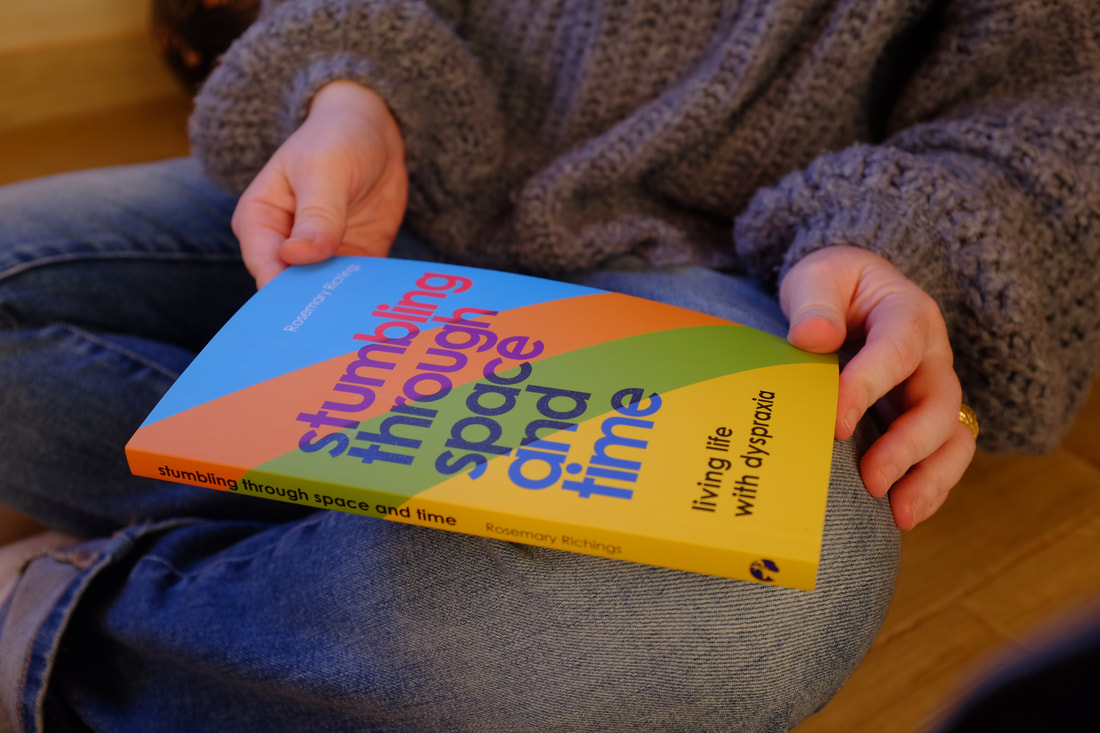
Stumbling Through Space and Time: Living Life With Dyspraxia was the book that started my author career. Before that, there was an e-book on blogging that no one read or cared all that much about. I was also a writer for hire long before that.
Sometimes, my name appeared in print. But much of the work I did was ghostwriting for companies and individuals, too. Or I was someone’s editor, or guest speaker. Many of these projects are a lot of what I do today, when there isn’t a new book to work on or advocacy work to do.
But how did I bring my first book to publication?
Soon after I got my first book deal, I wrote a Medium post that explained exactly what happened:
“After I pinned a tweet about my book to my profile for an extended period, it gained attention. I then received many likes and retweets. Weeks later, Amy Lancaster Owen of Jessica Kingsley Publishers Twitter DM’ed me and asked for a copy of my book proposal and manuscript. One year after receiving my manuscript, Amy made an offer on my book, and I accepted.”
Before that, I was writing endless query letters and feeling like I was getting nowhere.
However, this strategy would likely yield different results now. Today, Twitter has a new name and is a very different platform.
That’s exactly why I deactivated my account. I wasn’t reaching my target audience as easily as I once did. The loss of feeling psychologically safe on that platform was definitely part of why I deactivated my account too, but that’s a topic for another time.
Yet, I did feel safe enough to write a book about my diagnosis journey. And that is exactly what Stumbling Through Space and Time is all about. However, figuring out which parts of my story were worth telling was the hardest part of all. That’s why I wanted to share with you the key approaches I took to figuring out which parts of my story were worth writing about.
1. My childhood diaries were invaluable resources.
The trouble with writing about your past is that memory is an imperfect thing. It doesn’t matter how good your memory is.
Trying to recall every detail of your fourth birthday party as an adult is immensely tricky. Because you will definitely not remember certain details of what actually happened. Then there’s the complexity of your relationships with other people.
Your point of view on others around you may be different than your family or peers just because of how they made you feel. Then there’s your relationship with your own body, mind, and how others around you see you. That is often equally as complex for the same reasons.
Part of what I liked about using my old diaries was that they helped me work around this particular issue.
It was like looking into a time machine. Many of the sentences I found were useful insights into what sorts of environments were good or bad for my quality of life back then.
A great example of this is this passage from when I was only 13 years old. Reading about the discomfort of gym class helped me write about where that discomfort was actually coming from:

Before I found that passage, P.E. in school was definitely something I would describe as traumatizing, but it was hard to describe in words the exact reason why. To not permanently ruin my relationship with exercise, I just needed to try out activities I enjoy without the shame of my peers or anyone else.
But to make my diary entries a worthwhile part of the writing process, I had to always ask myself: does this teach others about living with dyspraxia, or is it just relevant to me? Because there are certain details of my story that are uninteresting to people who weren’t actually there.
2. I talked to people who were actually there.
I had a WhatsApp call with my dad recently, where he told me about a book he was reading.
In that book, the author pointed out what caring for an elderly parent taught her about memory and the human brain.
The bit that stood out to him most was the emphasis on how we all create our own narratives on a loop of things that happen in our lives. The book’s theme fascinated me, because it’s something I confronted while writing Stumbling Through Space and Time.
Since the purpose was to raise awareness above all else, I had to avoid becoming an unreliable narrator of sorts. So I started to talk to people who were there… well, some of them at least. The people I could have fact-checked things with were often either people I had never disclosed to before or people I had lost touch with. Same goes for the teachers and people I had worked with before.
But at least I had family to fact-check events with. The conversations I had with them about small details they noticed about how my brain works taught me a lot. In fact, some of these conversations informed what was included in the book itself.
3. Working with a mentor gave me a real sense of perspective
2020 was a big year for me; I got married. I started writing Stumbling Through Space and Time. And the pandemic…of course.
The pandemic definitely had a significant effect on the entire writing process itself.
Given the timing of when I started writing Stumbling Through Space and Time, the pandemic was a lingering presence in the entire writing process. In a small apartment, my spouse and I were isolated together.
The core positive of isolation was that it created the perfect conditions to write a book where looking backwards at my own memories was part of the writing process.
That part was particularly great because it made life quieter, slower, and definitely less busy.
Before the pandemic started, I got a publishing professional to mentor me on my book.
I had been writing for years by this point, and I decided that I needed professional support to help me get this book ready for a publisher. Fortunately, finding a mentor was a seamless process for me. I had a co-working space membership back then and was part of a writing group run by a long-term friend of mine.
I ended up finding my mentor because of a weekly event that the co-working space runs called Innovator Drinks. Here’s how I described the events that allowed me to meet my mentor:
“Innovator Drinks is a clever attempt at getting members of the co-working space to meet and talk to each other. Alcoholic and non-alcoholic drinks are a free feature of the event, which creates a friendly, casual atmosphere. At the event, I told one of the co-working space’s staff members about my book. Then, he gave me the name and email address of an indie publisher in the building.”
Two days after Innovator Drinks, I emailed the publisher, and he agreed to mentor me. Given that he had mentored neurodivergent and disabled authors before, the premise of my book was nothing new. In fact, it was something he was happy to help me with as I worked towards trying to get it published.
My mentor was a useful second pair of eyes that helped me focus on what was of interest to my target audience. Then, as soon as the manuscript was ready to be submitted, he helped me with the manuscript submission process. He was the tough love I needed at the time, who helped me approach the book submission process like a total pro.
Once the world went into lockdown, the mentorship process translated really well into a virtual process.
4. With the help of my parents, I found a treasure trove of documentation from my childhood.
As someone whose creativity and neurodivergence started to shine through at a very young age, my parents collected a lot of paperwork.
While writing Stumbling Through Space and Time, I found out just how large their time machine of paperwork with my name on it actually is. The report cards, photos, and psychological evaluations were the least surprising part. Yet what really surprised me was how many of my stories, poems, drawings, and lists my parents stuffed into boxes.
I spent a lot of time reading through every scrap of paper, seeing, through my parents’ eyes, what growing up accommodating and celebrating my way of thinking was really like. This handwritten list in a notebook, for instance, perfectly captures how I saw myself when I was a teenager.
As I wrote my book, my dad really wanted me to see bits of paper like this, because it said so much about how my brain works.

5. The writing process itself became part of figuring out what belonged
I didn’t just write the manuscript once and send it off. Every time I finished a draft, I printed a copy so that I could see how it looks visually on paper.

Seeing the pages in a physical format helped me more easily identify what makes sense and what needed to be cut or changed.
But honestly, what made the biggest difference was showing the drafts to other people.
My husband read my first draft with a trained editor’s eye. I also showed some of my chapters to my writing group.
The very first time I showed the draft to strangers was when I decided to try out going to a non-fiction writer’s group at a local university.
Hearing what they thought was very encouraging, especially given that many of them are professional writers and people who teach writing.
Then I took it to a place slightly more familiar: a writing group run by my long-term writer friend, Andy Ruffett. Both groups offered different forms of feedback, but it definitely helped me better understand what did and didn’t resonate with readers.
Any feedback I could get at the time was definitely valued, given that the book required me to spend so much time inside my own memories. The trouble with that type of writing is that becoming too close to the material can so easily happen.
6. The book was the product of a life changing quickly
I remember spending some of my honeymoon in Morocco adding various details to the first draft of the manuscript itself.
On trains and in hotels, I would pick any spare moment I could get to write for one to two hours per day.
When we came home, it was like a whole other world. The pandemic was in full force, and the whole world was about to shut down.

One year later, we returned to Morocco, determined to try renting an apartment. When Morocco closed its borders after a family Christmas visit, we could not return. So we took our belongings and lived in an Airbnb in Ericeira, Portugal, for a month before we could return to Morocco. It definitely wasn’t a bad place to be for a month. The food was great, the sea breeze was nice, and there was lots of nice scenery to look at.

In the midst of all this change, I just kept writing. As I wrote about my past, my present was changing quickly. This meant that every draft required me to simultaneously look back at my life while still figuring out what my life would look like in the long run.
Ultimately, figuring out what belonged in the book involved close examination of my own memories, old documents, other people’s perspectives, several hours of editing, professional guidance, and the changing circumstances of my own life.
Leave a Reply