
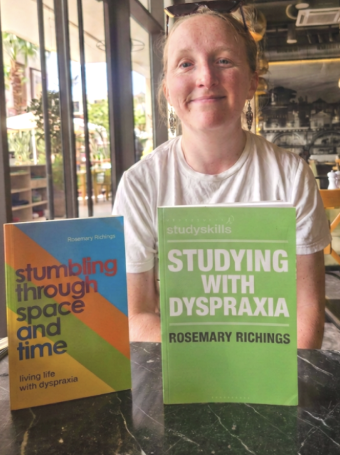
I have now published two books through traditional publishers. My first book, Stumbling Through Space and Time: Living Life With Dyspraxia, came out through Jessica Kingsley Publishers in 2022. My second book, Studying With Dyspraxia, came out through Bloomsbury in 2026.
Since I have gone through the traditional publishing process twice, aspiring authors often ask me questions about how this process works.
If you have ever wondered about how the publishing process works, here are the seven most common questions I am asked, along with my honest opinions on them.
1. What is the querying process?
Unless you’re a celebrity or influencer, the querying process is what will put your manuscript in front of agents and publishers. But what is querying exactly?
Querying is a combination of a writing sample and a sales pitch.
As you go through the querying process, you put your work into something called the slush pile, which consists of manuscripts and sales pitches submitted by the general public. Unless you have explicitly been asked to submit your manuscript to a publisher or agent, you will have to submit your manuscript to a publisher or agent who accepts unsolicited submissions.
But what does that mean exactly? HarperCollins defines unsolicited submissions as “any work submitted to a publishing house without prior invitation or a formal request from the publisher.”
Typically, publishers and agents choose which manuscripts are worth reading based on their preferences and what they think they can sell to the general public.
Not taking publishing professionals’ feedback too personally is crucial, since every agent and publisher has different submission instructions and preferences. The only way to find out what they want is to read their website, along with sources like QueryTracker and Manuscript Wish List.
For more craft-based guidance on writing an effective query, I highly recommend purchasing a copy of Write the Perfect Book Proposal. It’s a resource that I regularly recommend to authors for one, very specific reason: it’s a book where two experienced literary agents share their insights into what book proposals typically get their attention and why.
2. What if I fail?
Here is the harsh truth you must accept when you go through the querying process: you are going to hear the word “no” a lot.
That is true no matter how thoroughly you research the agents and publishers you query. It is also true no matter how great your book is.
If you’re going through the querying process, let me put things into perspective by sharing how long it took for me to stop hearing the word “no”.
After one and a half years and over 90 query letters, my first book had two offers of publication to choose from. When it’s your work being submitted to a publisher, it’s very easy to forget that for publishers a no is never personal. It’s just business.
For writers, the idea of their work as a product can be difficult to grasp, but thriving as an author is about realizing that the publishing process is a business transaction. This very notion can feel so strange when you have put so much of yourself into your work.
It’s also crucial to recognize that publishing is also highly competitive and unpredictable. What people want changes constantly.
So if it’s a “no” right now, someone else may say “yes” six months from now for reasons you have no control over.
Yet the reason why people say no may also have something to do with how you crafted your pitch. That’s why you should also read the book on book proposals I recommended in the first half of this article and use it as a guideline for crafting your query.
Never send your query until you have got other people to give you constructive feedback. Ask the person editing your work to review both your manuscript and your query letter.
But where can you find editors before getting an offer of representation?
Great places to find editors include writers’ groups, along with a supportive mentor or professor. Friends and family can help too, as long as they will do more than say “good job” or “I don’t like this.”
3. How much does it cost to get your work published by a traditional publisher?
The payoff of accepting an offer of publication is that you don’t have to pay for the publishing process.
Traditional publishing, by definition, is a financial and emotional investment and a business partnership. Authors receive a cut of their book sales. Their agent, if they have one, also receives a cut. The publisher gets a cut too. The money received from sales covers expenses needed to produce more books, such as staff salaries.
Sometimes, the author receives an advance, a sum of money paid out in installments. The amount paid depends on the estimated number of copies the publisher expects the book to sell.
The only things you might have to pay for are optional marketing choices you make independently. Optional expenses include creating merchandise for your book, paying for ads on platforms like Amazon or Facebook, or hiring a public relations specialist. Whether these expenses are worth it or not depends on your budget and target audience.
If a publisher or agent says that you have to pay to publish your work, assume it’s a scam if they do not explicitly claim to offer self-publishing services.
When in doubt about a publisher’s credibility, ask the authors who have published with them before about their experiences. You can also consult the Writer Beware database for further background checks.
4. Do you need a literary agent?
The short and truthful answer to this question is… “it depends.”
Some publishers will not consider the work of authors, especially debut authors, unless an agent submits the manuscript.
The only way to know whether you need an agent is to read the submission guidelines of the publishers you are interested in.
The language that agents use is usually pretty explicit. They will say something like “we accept unagented work” or “agented work only, please.”
If you write in a very niche non-fiction subject area, or you are likely to pursue offers from independent publishers, you may not need an agent.
So far, I have been able to publish books unagented because my core focus has been on neurodiversity-related resources rather than airport-friendly fiction.
But why might you need an agent?
The main benefit of an agent is that you have an advocate in your corner. Agents have contacts in the publishing industry. They also bring a lot of professional experience to decisions about who might be interested in your work and under what conditions.
Agents are often well-versed in the technical aspects of working with publishers, such as contract negotiations and crafting a pitch that captures publishers’ attention.
If you don’t have an agent, you have to figure these things out for yourself.
The main disadvantage of agents is that they make their money by collecting a percentage of your book sales. They also cannot guarantee an offer on your book.
There’s also no guarantee that you will like your agent, or agree with their vision for your book’s long-term future.
5. How long does the process of working with publishers take?
Once you start working with a publisher, you must be very patient because you are not their only client.
Other factors that affect how long each project takes include the different challenges each author faces and their pace of writing and revision.
But what about your editors?
Editors have to manage multiple projects at the same time while giving each book the attention it deserves.
So there isn’t a single answer to how long this process takes. If you have any questions or concerns while you wait, email your assigned editorial assistant.
Once your editor has finished a round of feedback, you will typically receive a detailed feedback letter by email. You will also receive a deadline for responding to the editor’s queries.
If you don’t like specific suggestions or don’t understand what’s being asked of you, bring up all questions and concerns before your assigned deadline.
6. What’s a platform, and will traditional publishers do all the marketing for me anyway?
The common misconception is that platform equals social media. More specifically, people often think it means having a large number of social media followers.
Although social media influencers often get book deals these days, you don’t need their number of followers to have a worthwhile platform.
What matters the most is how relevant your audience is to your writing.
Your platform could include social media. It could also include magazines you have written for, events you speak at and attend, and professional networks you have built over time.
Prioritizing strategic connections in your life can help you build a community of people who recommend your work to others and spread the word to their own contacts.
At every stage of the process, think of your book as a tool for expanding your platform. Your book doesn’t need a huge platform behind it before publishing can become an option for you.
Even though large, traditional publishers often have a marketing department, they will not do all your marketing for you.
Publishers may put your books on sale or list your book on their website or at trade fairs. They may also celebrate notable achievements and events you are part of.
For instance, when I was published in the Toronto Star, Jessica Kingsley Publishers, the publisher of my first book encouraged their newsletter subscribers to read my article. But the article itself wasn’t something I got to write because of them. I just happened to have an idea for an opinion piece that the Toronto Star was interested in.
Basically, the moral of the story is that you should never assume that your publisher will secure a panel spot at a conference, event or publicity opportunity.
7. Can I make a significant amount of money from publishing?
Contemporary media is filled with rags-to-riches stories where people go from having nothing to being rich because of one or more books they wrote.
Hate to break it to you, but stories like these are rare.
So what does author income actually look like?
These days, most authors make their money through a combination of some or all of the following:
- Royalties
- Advances
- Copyright payments for the legal redistribution of book passages in contexts such as university textbooks, audio recordings, television, and other forms of media.
- Library loan grants
- Consulting and freelance work
- Other forms of income: full or part-time jobs, gig work, income from other members of your household, etc.
Unless you’re working full or part-time and have a decent salary, many of these income sources are seldom available in large or consistent amounts of money.
If traditional publishing is something you genuinely want, you should also consider whether a lifestyle change, or moving to a different location may make it a viable option.
Above all else, I hope you didn’t find this article too discouraging.
Just keep writing either way.
If you have a book project you genuinely believe in and want to share with the world, keep going until you find someone who can help you reach your publishing goals.
Now that I have covered all seven of the most common publishing questions, I would love to hear more about what your experience with publishing has been like so far. Feel free to share your experiences in the comment section below.
This post was originally published on my Medium page on May 28, 2025. I have since adapted and updated it for this website.
Leave a Reply